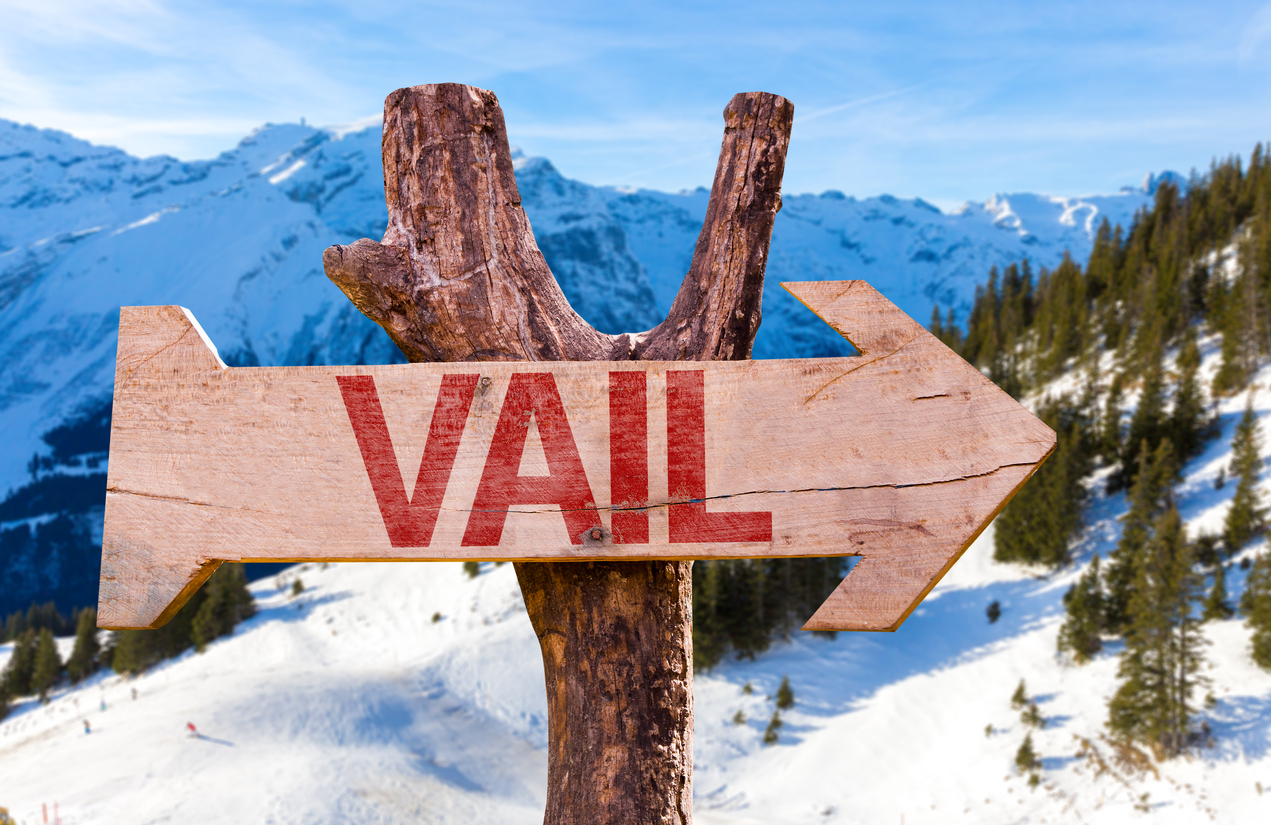
Vail is the biggest name in Colorado skiing, and it earns the billing. Since opening in 1962 it has grown into the state’s marquee resort: a mountain so large you can ski it for a week without repeating a run, paired with a purpose-built village designed to feel like a European alpine town. For many skiers it’s a bucket-list trip — and once you factor in the neighboring, even more exclusive Beaver Creek, the Vail Valley is a destination in its own right.
| Pass | Epic Pass (Vail Resorts) |
|---|---|
| Skiable terrain | ~5,300 acres — the largest single mountain in Colorado |
| Elevation | ~8,120 ft base / ~11,570 ft summit |
| Signature terrain | The Back Bowls & Blue Sky Basin |
| From Denver | ~2 hours west on I-70 |
| Best for | Big terrain, the Back Bowls, an upscale village |
The mountain
Vail’s front side is a vast, immaculately groomed playground — long cruisers and tree runs that suit beginners and intermediates beautifully, served by high-speed lifts and a gondola out of the village. But the mountain’s reputation lives out back. The Back Bowls are roughly seven miles of wide-open, above-treeline terrain — mostly intermediate-and-up — that are simply glorious on a powder day. Beyond them sits Blue Sky Basin, more remote gladed terrain that feels like backcountry with a lift home. Add terrain parks and a dedicated learning area and Vail genuinely has something for every level, though the front side is where beginners should spend their time.
Summit Express · Denver Airport ShuttleSkip the rental car & the I-70 driveThe Denver-airport shuttle we take every ski trip — and Breckenmendations readers save 5%, applied automatically at checkout. Private rides available too.Book & save 5% →The village & dining
Vail Village is a pedestrian-only, faux-Tyrolean village of cobbled walkways, covered bridges, and heated sidewalks, with Lionshead a second base area a short stroll or bus ride away. It’s beautiful, immaculate, and unabashedly high-end: ski-in/ski-out luxury hotels, fine dining, and boutique shopping dominate, though you can still find a slopeside burger and a brewpub if you look. It’s one of the priciest resort towns in the country, and it leans into it. For lodging strategy across the region, see our where to stay guide (Summit County is a cheaper base a short drive east).
Lift tickets & passes
Vail is on the Epic Pass, which also covers Breckenridge, Keystone, and Beaver Creek in the area. If you’ll ski more than a few days, a season pass almost always beats day-of window tickets — walk-up prices at the big Colorado resorts are steep. Our Epic vs. Ikon guide breaks down which mountains each pass covers and when to buy for the best price. Direct lift-ticket and pass links are coming as we finalize our booking partners.
Getting there
Vail sits right on I-70 at Exit 176, about two hours west of Denver in good conditions — but winter weekends and post-storm traffic can add a lot, and Vail Pass just east of town is one of the corridor’s notorious chokepoints. Read our I-70 ski traffic guide, and consider flying into the Eagle County Airport (EGE), about 35 minutes west, to skip the drive entirely.
When to go
Ski season runs roughly mid-November to mid-April, with the deepest, most reliable snow in January through March. The Back Bowls need a good snow base to open, so they’re best mid-winter on. Summer brings hiking, biking, and the famous Vail farmers’ market. As with all of the high country, plan for the altitude — the village sits above 8,000 feet.
Gear & what to pack
Deep cold, thin dry air, and intense sun on snow make layering and eye protection matter more here than at lower resorts. Start with our base layers, ski gloves, and goggles guides, then run through the full Colorado ski packing list — and read up on altitude sickness before you arrive.
Vail or Breckenridge?
Trying to choose a base? Our head-to-head Vail vs. Breckenridge guide breaks it down — the short version: Vail for sheer terrain and luxury, Breckenridge for value, a livelier town, and a higher base.
Skiing here? See our full guide to skiing Vail.
Vail FAQ
Is Vail on the Epic or Ikon pass?
Vail is the flagship of Vail Resorts, so it’s on the Epic Pass — along with Breckenridge, Keystone, and neighboring Beaver Creek. See our Epic vs. Ikon guide.
Is Vail bigger than Breckenridge?
Yes — Vail is the largest single ski mountain in Colorado at roughly 5,300 acres, versus about 2,900 at Breckenridge. For a full comparison see Vail vs. Breckenridge.
What are Vail’s Back Bowls?
Seven miles of wide-open, mostly intermediate-and-expert terrain on the back side of the mountain — legendary on a powder day — plus the more remote, gladed Blue Sky Basin beyond them. They need a solid snow base, so they’re best mid-winter.
Is Vail good for beginners?
Yes — Vail’s front side has extensive gentle, well-groomed terrain and a dedicated learning area with a strong ski school, even though the mountain is famous for its big-terrain Back Bowls. Beginners should stick to the front side.
How far is Vail from Denver?
About two hours west on I-70 (Exit 176) in good conditions, though weekend and post-storm traffic can add substantially. You can also fly into Eagle County Airport (EGE), roughly 35 minutes away. See our I-70 traffic guide.
Is Vail expensive?
Yes — Vail is one of the most upscale and expensive resort towns in the U.S., from lodging to dining. Staying in Summit County (Frisco, Dillon) and driving over, or visiting midweek and in shoulder season, are the main ways to trim the cost.
More Colorado ski destinations: Vail · Aspen · Winter Park · Breckenridge · all destinations