Vail is the largest single ski mountain in Colorado and one of the most famous resorts in the world — endless front-side groomers, seven legendary Back Bowls, and the powder stashes of Blue Sky Basin, all above a European-style village.
Skiing Vail at a glance
| Pass | Epic |
|---|---|
| Terrain | Front-side groomers, 7 legendary Back Bowls, and Blue Sky Basin |
| Size | Over 5,000 acres — the largest single ski mountain in Colorado |
| Base elevation | ~8,120 ft (Vail Village) |
| Getting there | I-70 Exit 176 (~100 mi from Denver) |
The terrain
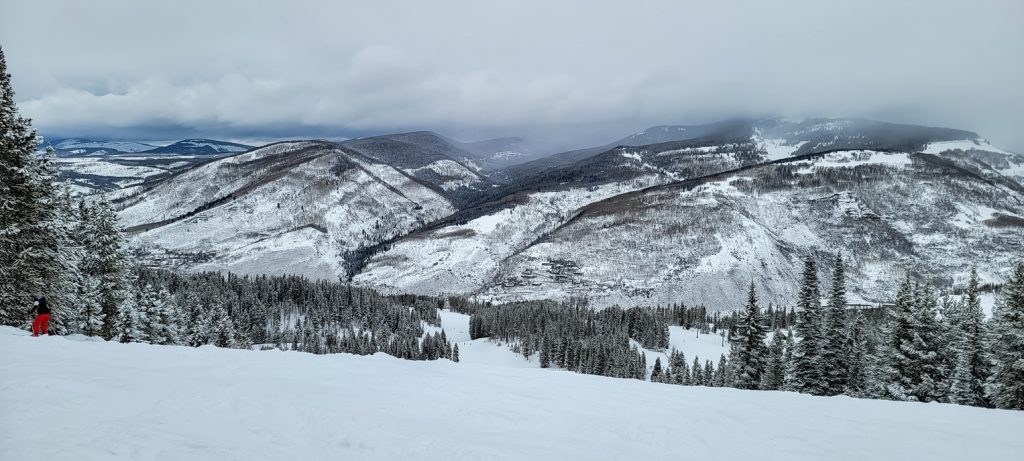
Vail’s sheer scale is the story. The front side is a huge network of groomed cruisers and tree runs; roll over the top and the seven Back Bowls open into wide-open, sun-and-powder terrain that feels endless on a good day; beyond them, Blue Sky Basin holds trees and steeps that stay soft longer. There’s beginner terrain too, but Vail rewards intermediates and above who want room to roam.
Lift tickets & passes
Vail is on the Epic Pass. If you’ll ski more than about five days in a season, a season pass almost always beats walk-up day tickets, which are expensive here. Our Epic vs. Ikon guide helps you choose, and lift-ticket/pass affiliate links will live here as they’re added.
What to pack
Cold, high-altitude sun, and long days on snow make layering and eye protection essential. Bring solid goggles, warm gloves, and merino base layers — our full Colorado ski & ride packing list walks through the whole kit, and the Altitude & Sun Kit covers the high-country essentials.
Getting there & altitude
Give yourself a buffer for weekend traffic and winter weather, and respect the elevation — base areas here sit high and lifts climb higher. Arrive a day early if you can, hydrate, and read up on altitude sickness. For the drive, see our I-70 ski traffic guide and carry a winter car kit.
Skiing Vail FAQ
Which pass do I need to ski Vail?
Vail is the flagship Epic Pass mountain. Compare passes in our Epic vs. Ikon guide.
What are the Vail Back Bowls?
Seven vast, mostly above-treeline bowls on the back side of the mountain — iconic wide-open terrain that’s spectacular on a clear powder day. Blue Sky Basin lies beyond them.
Is Vail good for beginners?
It has beginner terrain and good schools, but its strength is the enormous intermediate-and-above acreage; families sometimes prefer Beaver Creek or Keystone for a gentler feel.
How far is Vail from Denver?
About 100 miles via I-70 to Exit 176. Weekend ski traffic is significant — plan your timing.
Where should I stay to ski Vail?
Vail Village and Lionshead offer ski-in/ski-out (premium); nearby options include Avon/Beaver Creek. See where to stay and the Vail guide.