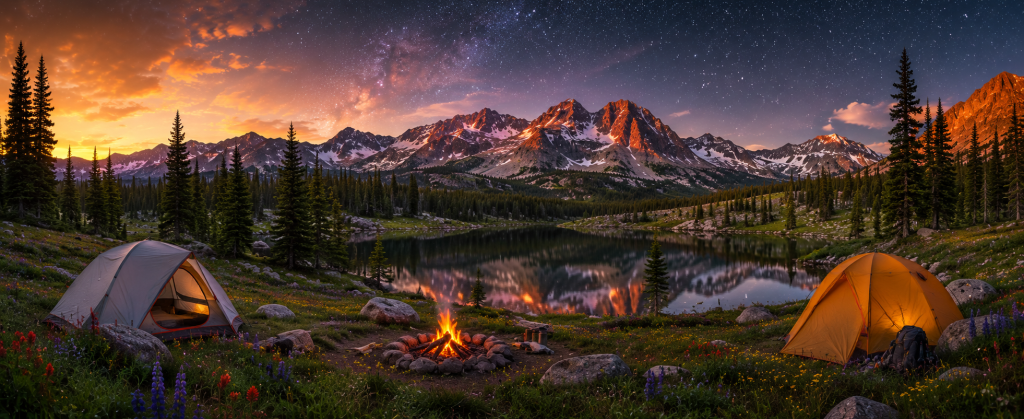
A night out above 10,000 feet is one of the best things you can do in Colorado — alpine lakes to yourself, a sky thick with stars, cold clean air. It also punishes a bad plan faster than lower-elevation camping does. Get the sleep system and the site right and it's pure magic; get them wrong and it's a long, cold night. Here's how we think about camping and backpacking around Summit County and the I-70 corridor.
Colorado high-country camping at a glance
| Prime season | Mid-June–September; nights stay cold all summer |
|---|---|
| Elevation | Most Summit County campgrounds sit 9,000–10,000+ ft |
| Summer night lows | Often 30s°F, can hit freezing even in July |
| Reservations | Developed campgrounds book early on Recreation.gov; dispersed is first-come |
| Watch for | Cold nights, afternoon storms, fire bans, proper food storage |
Where to camp: three styles
| Style | Amenities | Cost | Best for |
|---|---|---|---|
| Developed campground | Table, fire ring, vault toilet, often water | Paid (reserve) | First-timers, families, a comfortable base |
| Dispersed (primitive) | None — fully self-sufficient | Free | Solitude and flexibility |
| Backpacking | Carry everything in and out | Free (permits vary) | Getting deep to alpine lakes |
Campgrounds around Summit County
A cluster of Forest Service campgrounds rings Dillon Reservoir — sites like Heaton Bay, Peak One, Pine Cove, and Prospector put you on or near the water with a table, fire ring, and vault toilet. They fill fast on summer weekends, so reserve ahead on Recreation.gov. Prefer solitude? Dispersed camping is allowed across much of the surrounding White River National Forest, with rules: use existing sites, camp well back from water and trails, pack out everything, and mind current fire restrictions.
The cold-night reality
The single mistake we see most is gear rated for the daytime, not the night. Above 10,000 feet, summer nights routinely dip into the 30s and can hit freezing. Three things make or break the night: a bag rated colder than you expect to need, an insulated sleeping pad (ground insulation matters as much as the bag — a high R-value pad is not optional up here), and a dry layer to sleep in. Our Camping & Backpacking gear list covers the exact sleep system we trust.
Backpacking basics for the high country
Heading deeper in changes the math: pack weight matters, water is heavy so a filter earns its place, and you're fully responsible for your own safety and Leave No Trace. Start with well-marked trails, keep your first overnights short and close, and build from there. Everything on our Day-Hike Essentials still comes along, plus the altitude pieces in the Altitude & Sun Kit and, if you're bagging a peak from camp, the 14er gear list.
Water, food & wildlife
Treat all backcountry water — even a crystal-clear alpine stream can carry giardia, so filter or purify. Store food and scented items properly and never in your tent; know the current bear rules for the area (a bear canister or proper hang, depending on regulations). Give moose an especially wide berth in willow areas near water — they're common and more dangerous than bears.
Fire safety
Always check current fire restrictions before you plan a campfire — Colorado summers frequently bring bans, and they're enforced and important. When fires are allowed, use existing rings, keep them small, and drown them dead cold before you sleep or leave. When in doubt, cook on a stove and skip the fire.
When to go
Prime high-country camping runs roughly mid-June through September, once the snow melts out and before the nights turn hard. Early season means mud, lingering snow, and swollen creeks; September brings crisp nights, thinner crowds, and the first aspen gold. Winter camping here is a serious, gear-intensive pursuit — a different sport entirely.
Sleep-system gear: our picks for sleeping bags & padssleeping bags & pads, tents and the full camping gear guide.
Colorado camping FAQ
How cold does it get camping in the Colorado high country?
Above 10,000 feet, summer nights routinely drop into the 30s°F and can reach freezing even in July. Bring a bag rated colder than you think you need and an insulated sleeping pad — ground insulation matters as much as the bag. See our Camping & Backpacking gear list.
Do I need a reservation to camp near Breckenridge?
For developed Forest Service campgrounds around Dillon Reservoir (Heaton Bay, Peak One, and others), yes — they book early for summer weekends via Recreation.gov. Dispersed camping on surrounding national forest land is generally first-come and free, with rules to follow.
What's the difference between developed and dispersed camping?
Developed campgrounds have amenities (table, fire ring, vault toilet, often water) and cost money with reservations. Dispersed camping is free, primitive, and fully self-sufficient — no facilities, and you pack out everything. Backpacking takes it a step further, carrying everything to a backcountry site.
Can I have a campfire?
Only when there's no fire ban — and Colorado summers frequently have them. Always check current fire restrictions for the specific area first, use existing rings, keep fires small, and drown them dead. When in doubt, cook on a stove.
Is the water safe to drink while camping?
No — treat all backcountry water. Even clear alpine streams can carry giardia, so always filter or purify. A pocket filter is one of the essentials in our gear list.
How do I store food to keep wildlife away?
Never keep food or scented items in your tent. Store them properly per the area's current rules — a bear canister or a proper hang — and keep a clean camp. Give moose a wide berth near water.
What gear do I need for high-altitude camping?
A warm-rated sleeping bag, an insulated pad, a dry sleep layer, a reliable stove, and a water filter, on top of your day-hike basics. Full breakdown in our Camping & Backpacking gear list.
When is camping season in Summit County?
Roughly mid-June through September. Earlier brings snow, mud, and high water; September offers crisp nights and fewer crowds. Always check conditions and reservations before you go.